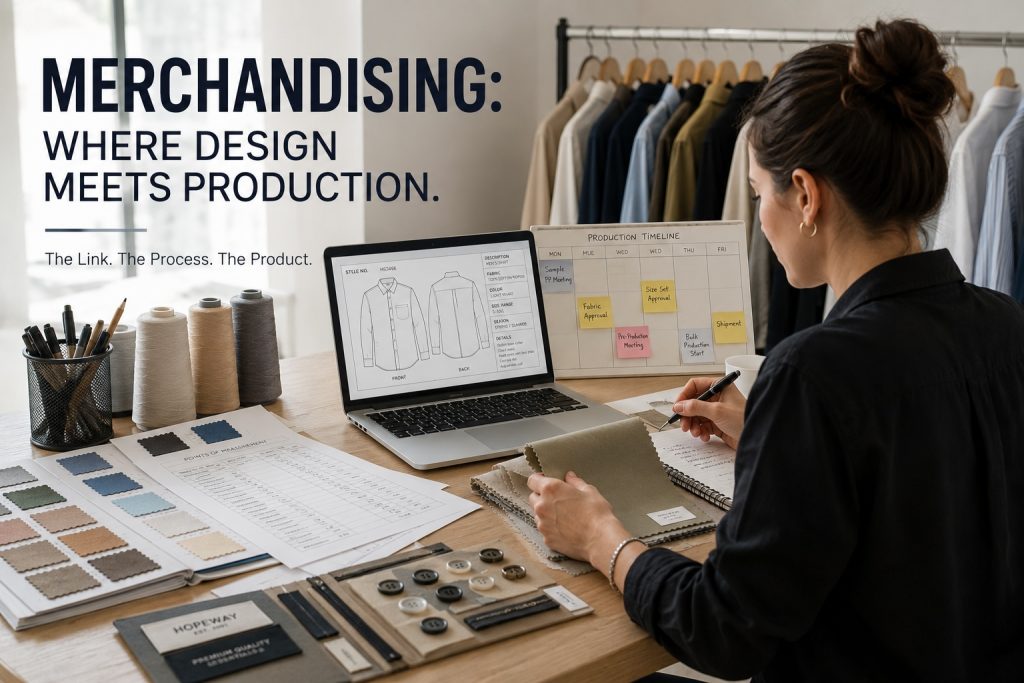
In the apparel industry, a merchandiser is often described as the bridge between designers and manufacturers.
In reality, the role is much broader.
A good merchandiser is not only responsible for following orders. They coordinate information, manage risks, solve problems, and ensure that products move smoothly from concept to delivery.
For fashion brands, the merchandising process typically involves:
• Understanding product requirements and target costs
• Coordinating sample development
• Sourcing fabrics, trims, and accessories
• Managing approvals and revisions
• Monitoring production schedules
• Following quality standards
• Coordinating shipment and delivery
At every stage, a merchandiser is expected to keep multiple stakeholders aligned, including designers, production teams, quality controllers, and logistics partners.
As supply chains become increasingly global, the skills required of merchandisers have also expanded.
Among the most important competencies are:
Communication Skills
A merchandiser must communicate effectively with people from different cultural and professional backgrounds. Clear communication often prevents costly misunderstandings and delays.
Language Ability
For export-oriented businesses, language proficiency remains a fundamental skill. The ability to accurately convey technical requirements, negotiate solutions, and build trust can significantly improve efficiency.
Product Knowledge
Understanding fabrics, garment construction, accessories, printing&embroidery processing, washing, and other finishing processes allows merchandisers to identify potential issues before they become production problems.
Planning and Organization
Successful merchandising depends on managing multiple timelines simultaneously. Missing a single approval or material deadline can affect the entire critical path.
Problem-Solving Ability
Production rarely goes exactly as planned. Strong merchandisers anticipate risks, evaluate alternatives, and respond quickly when challenges arise.
Attention to Detail
Artwork, specifications, measurements, trims, labels, packaging, and shipping documents all require careful review. Small mistakes can create significant consequences at scale.
Perhaps most importantly, good merchandising is not simply about processing orders.
It is about ensuring that information flows accurately, decisions are made efficiently, and products are delivered as intended.
In many apparel businesses, the difference between a smooth production cycle and a problematic one often comes down to the effectiveness of the merchandising team.
What skill do you believe is most important for a merchandiser in today’s apparel industry?