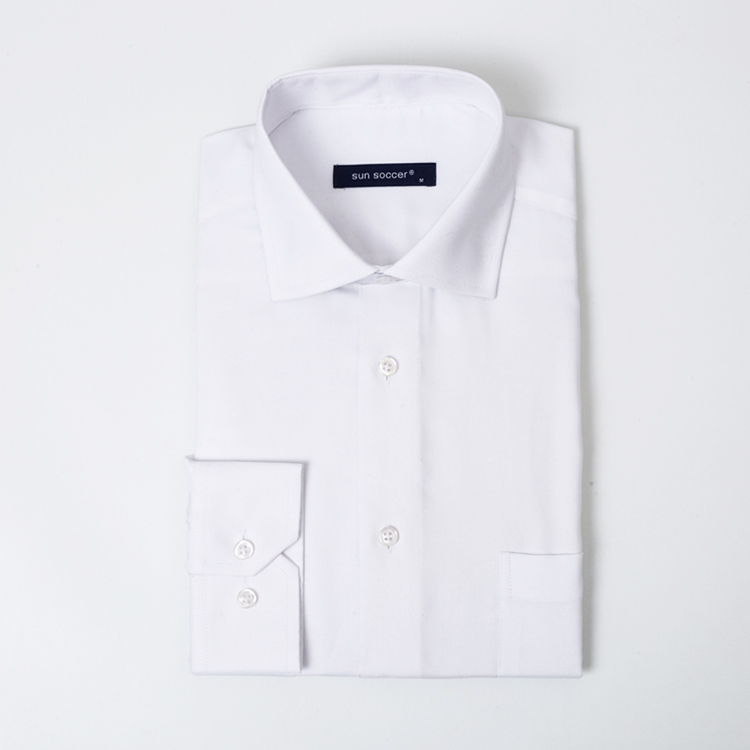
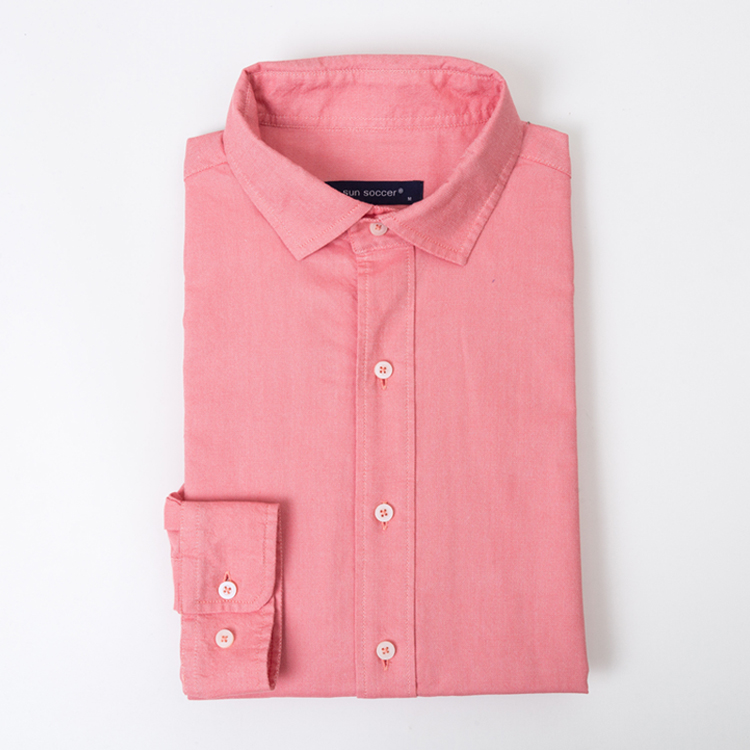
Even within the relatively small category of woven shirts, there are a great many ways to classify products: by fit, collar shape, by styling, pattern, by finishing or functions.
But in general, most woven shirts can still be divided into two major categories:
• Dress Shirts
• Casual Shirts
Today I’d like to briefly share some practical differences between them from a manufacturing perspective.
🔹 Fabrics
Dress shirts often use finer-count poplin, twill, dobby, pinpoint or stretch fabrics with smoother surfaces and a refined hand feel.
Casual shirts typically explore a wider variety of textures and weights — broadcloth, oxford, chambray, denim, flannel, linen blends, washed cottons, and printed fabrics.
🔹 Construction & Linings
Dress shirts usually require more structured collars and cuffs with stable interlinings to maintain a crisp appearance.
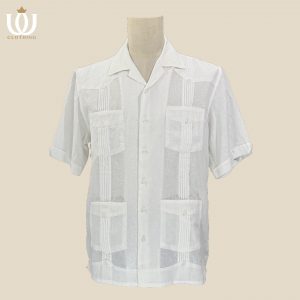
Casual shirts often adopt softer constructions, washed effects, and more relaxed collar shapes such as button-down or camp collars.
🔹 Trims & Details
Dress shirts generally use cleaner trims and tonal details to maintain elegance.
Casual shirts allow more freedom in buttons, contrast, embroidery, prints, and decorative elements.
🔹 Packing Methods
Dress shirts are commonly packed “stand-collar” – with collar supports, butterfly clips, collar stays and folded boards to preserve presentation.
Casual shirts usually use more relaxed packing methods such as flat packing, hanger packing, depending on retail positioning.
🔹 Occasion & Styling
Dress shirts are designed for formal or business occasions. Their appearance is usually cleaner, sharper, and more structured.
Casual shirts, on the other hand, focus more on comfort, versatility, and lifestyle expression.
At Hopeway Clothing, we work with both categories extensively — from formal business shirts to fashion-oriented resort and casual collections.
👔🧵